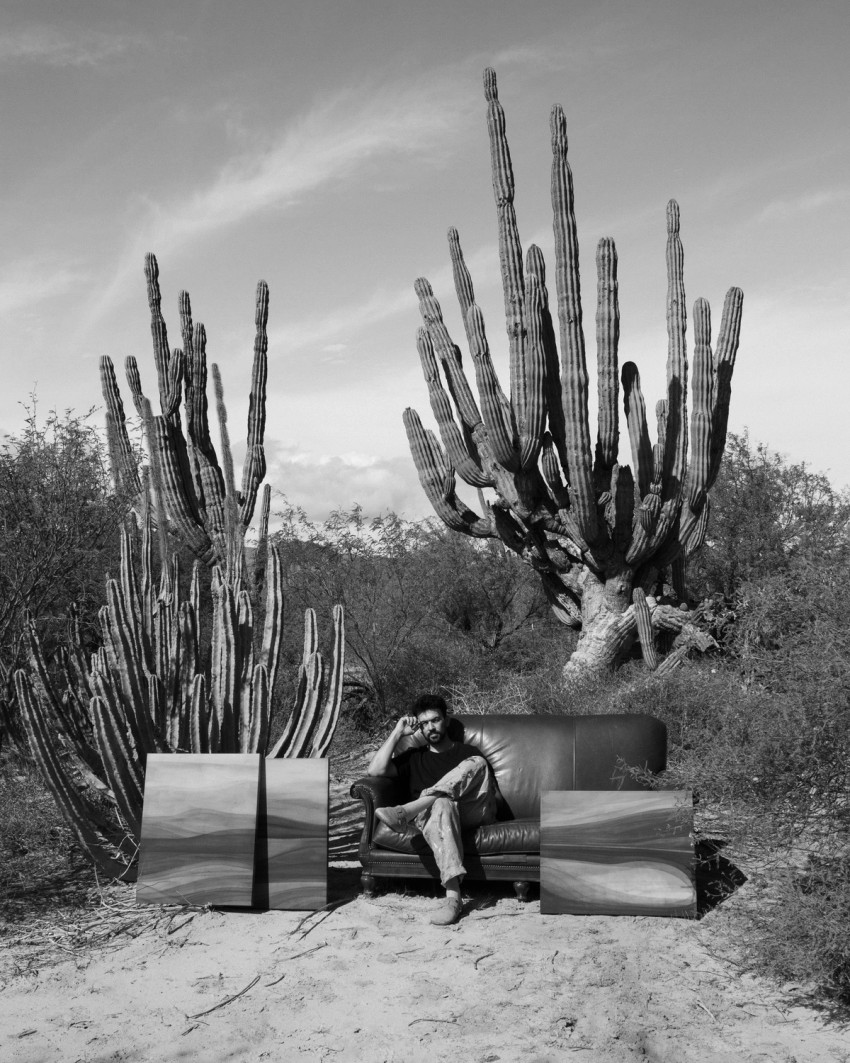
Pólvora Artist Residency in Baja Sur, Mexico
A desert artist residency that led me to painting with insects
I arrived in Baja California without a plan.
The residency at Pólvora came together through coincidence rather than intention. A conversation in Bali led to a connection, and from there the possibility of spending time in Baja unfolded naturally. I did not know much about the place before arriving, and that felt important. The way the residency formed was relaxed and unforced, and I wanted the experience itself to remain the same.
I arrived in October 2025, alone, with the loose intention of beginning a new body of work shaped by the desert and local materials. Beyond that, I tried not to decide too much in advance. I wanted to see how the place would guide the work.
Daily Life in the Baja Desert
The rhythm of life at Pólvora revealed itself quickly.
Each day began with an early morning coffee at the restaurant, which became the centre of daily life on the residency. Fernanda and Tino (the owners) were always there, along with the staff and familiar faces from the local community. Conversation flowed easily. People shared stories about life in Baja, their work, and their routines. In return, I shared my own story with those who were curious. Over time, the restaurant became more than a place to eat. It was where the day took shape.
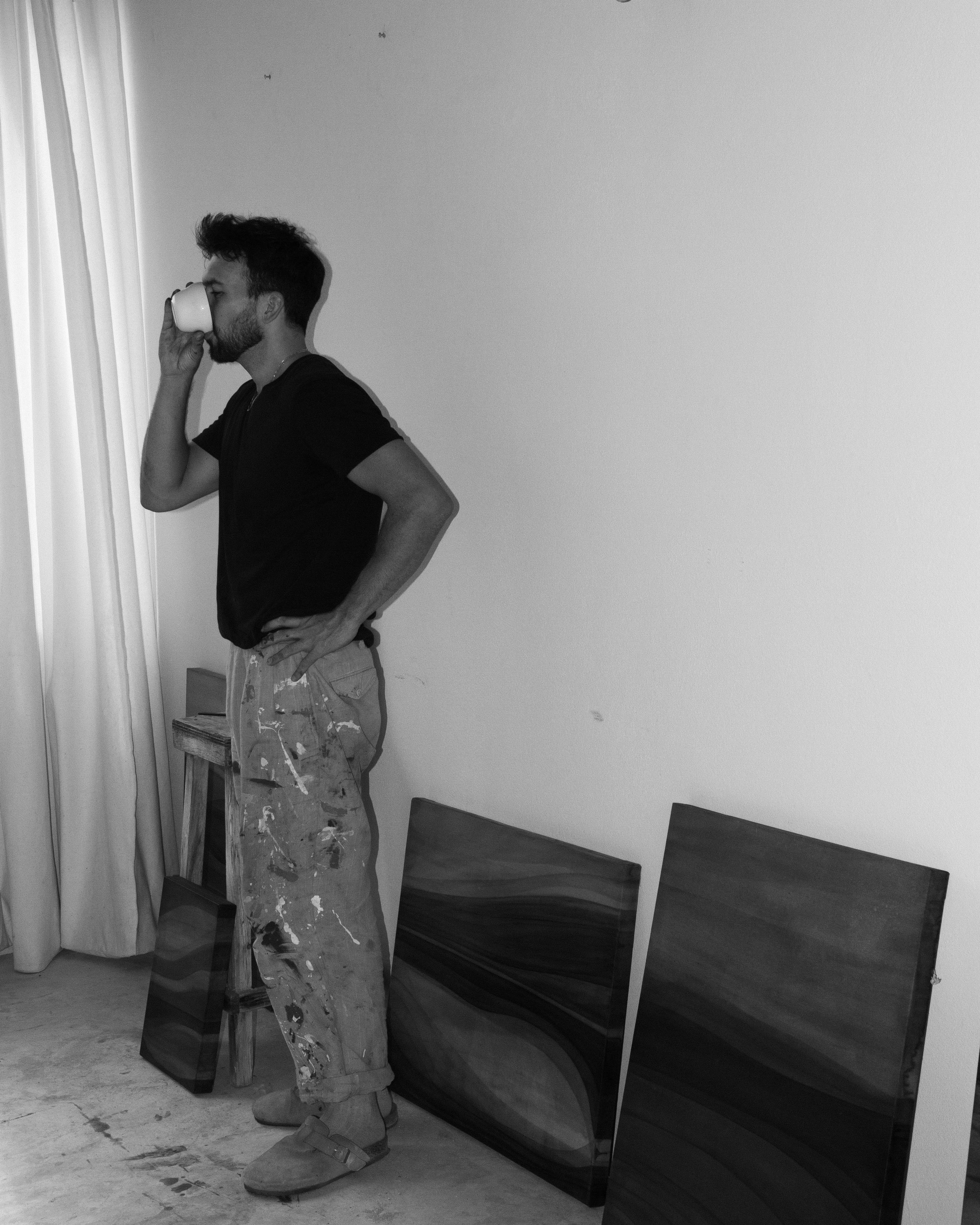
Meals, conversations, and chance encounters created a sense of belonging that I had not anticipated. For a solo residency, this communal energy mattered deeply. It grounded the experience socially and offered exchange and inspiration alongside long stretches of focused studio time.
Outside of this hub, days unfolded through movement and observation. Horse riding through cactus fields, running, and swimming in the ocean became part of the daily rhythm. Each morning I was greeted by the donkey and goat on the ranch, and by a growing family of puppies that seemed to expand week by week. These small, repeated moments softened the urgency I often carry into my work and allowed a steadier pace to take hold.
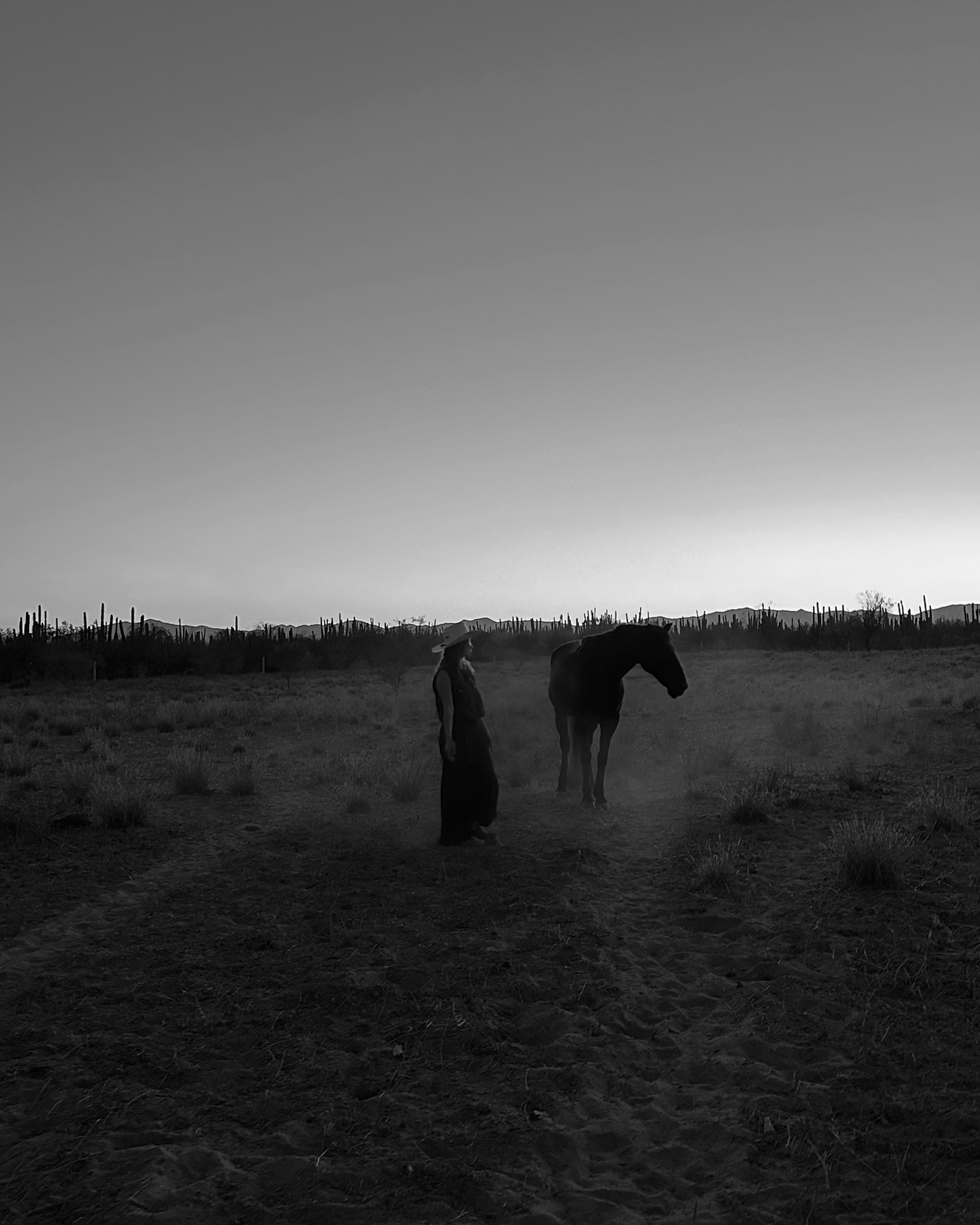
The desert itself was vast, open, and stripped back. Bright light, heat shimmering across the land, and warm days followed by cool nights shaped how time was felt. Colour appeared sparingly. Silence stretched. Darkness arrived early, and evenings slowed naturally. Life simplified without effort, and I found myself winding down by eight or nine each night, attuned to a rhythm far removed from city life.
Working with Natural Materials
Working in the desert introduced resistance.
Materials were not always easy to find. Certain tools and supplies took time or were simply unavailable. Processes slowed and tested patience. Instead of pushing through, I had to respond. Waiting, adjusting, and working with what was present became part of the process.
This shift reshaped the work in a fundamental way.
Cochineal, Nopal, and Plant Dyes
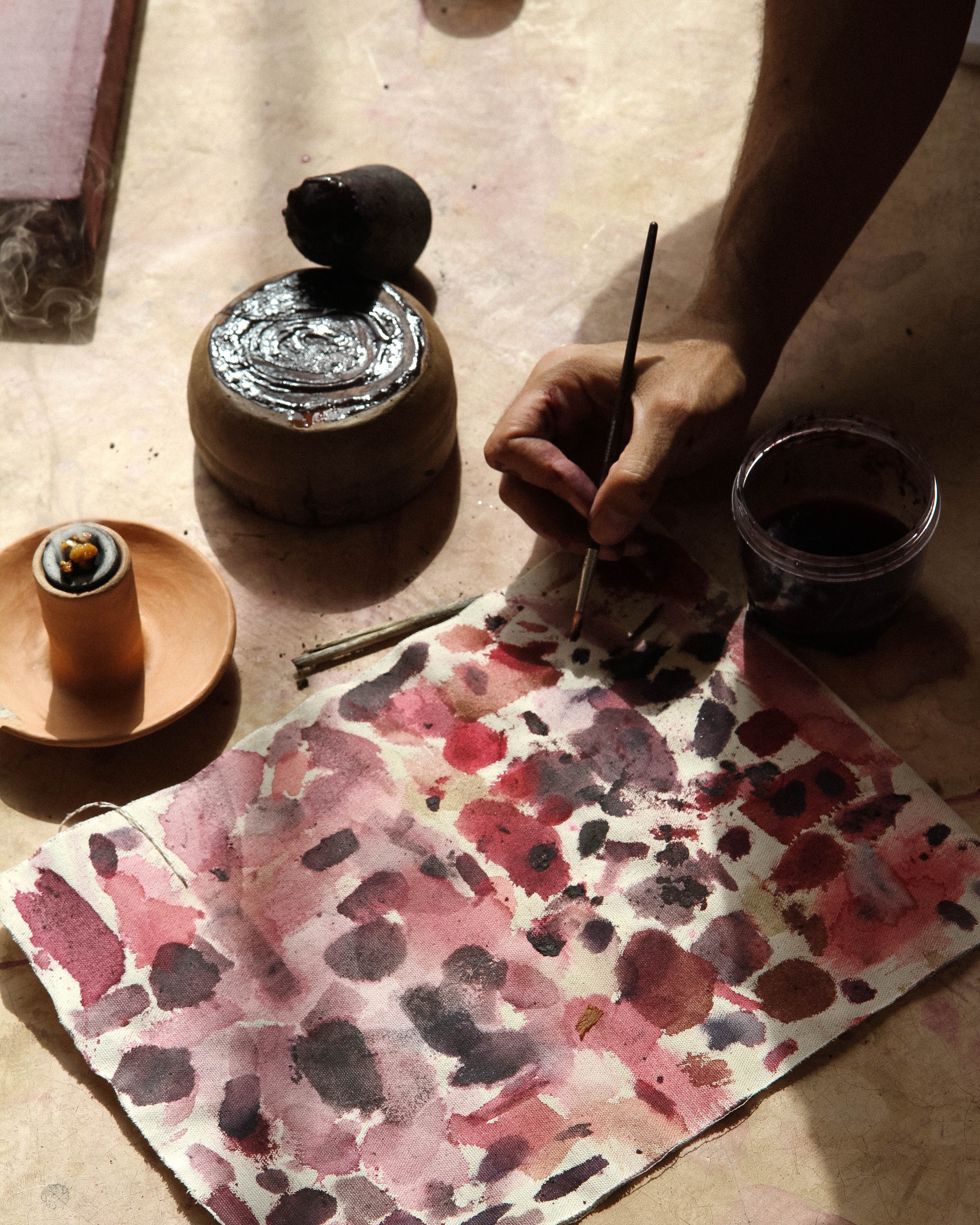
Over time, I committed fully to natural materials. The paintings were developed almost entirely through nopal cactus and cochineal. This was not planned, but gradually revealed itself as possible through refinement rather than expansion. By adjusting the pH of the cochineal and working patiently in layers, an unexpected range of colour emerged. Limiting the materials created depth rather than restriction.
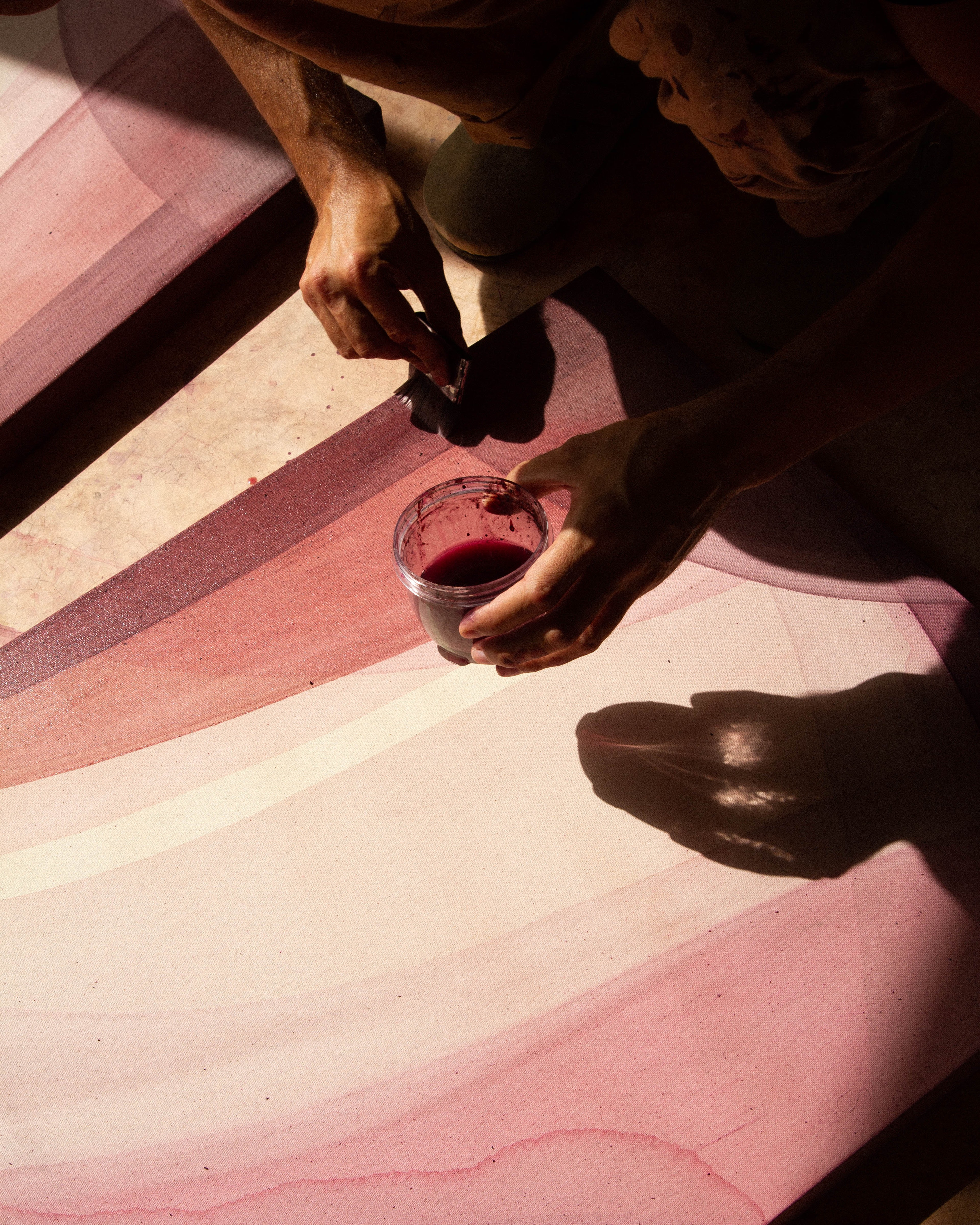
Working this way changed my relationship to control. Once surfaces darkened, they could not easily be reworked. Without synthetic whites to reclaim light, space had to be held intentionally from the beginning. The process demanded foresight, restraint, and trust, reflecting the conditions of the environment itself.
Alongside painting, the work expanded into sculpture and installation. Large scale fabrics were dyed using marigold, longboy tree, and restaurant scraps such as discarded coffee grounds, onion skins, and avocado. These materials extended the idea of material intelligence into the everyday and overlooked.
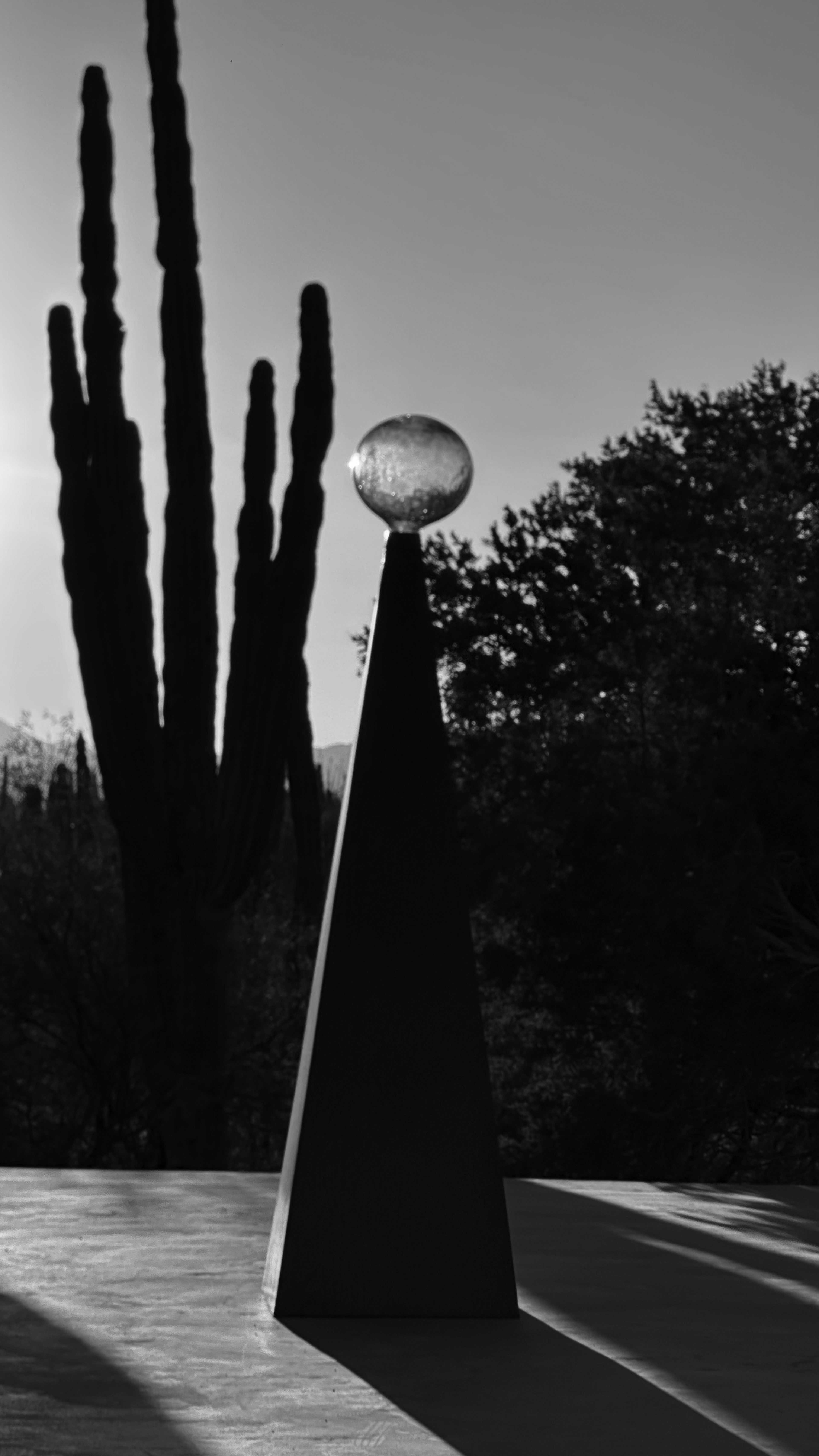
The fabrics surrounded a central sun altar sculpture, moving with the wind and casting shifting shadows throughout the day. Air became visible through motion. Light changed constantly. The textiles formed a soft, permeable container around the sculpture, allowing the environment to remain active rather than enclosed.
The Final Exhibition
Toward the end of the six weeks, the work came together in an exhibition on site.It felt significant to share the work in the same place it had been formed, with the people who had shaped the experience day to day. Faces from the restaurant, the ranch, and the surrounding community gathered in the space, bringing with them the conversations, routines, and relationships that had quietly underpinned the residency.
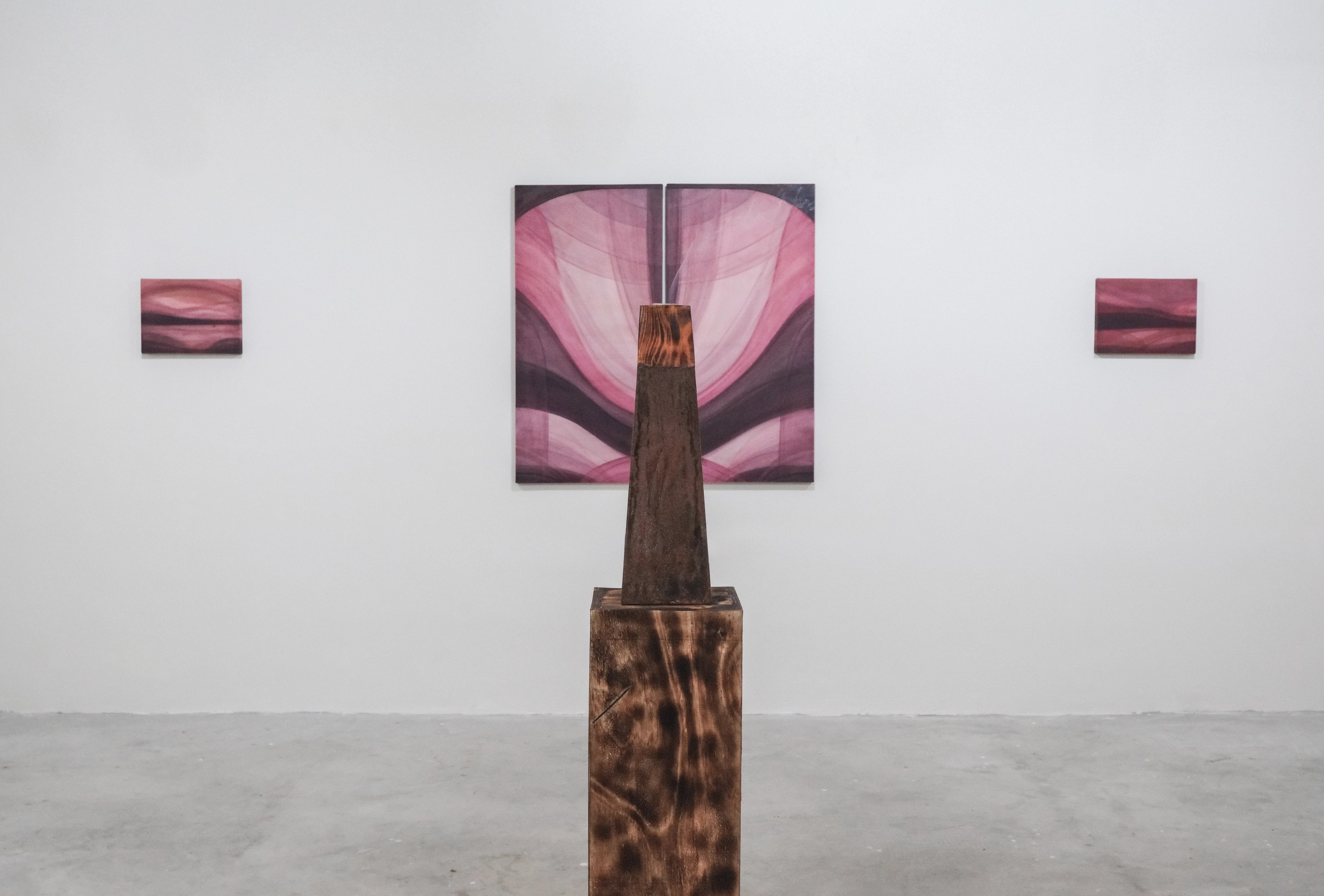
It was the first time I presented both sculpture and painting together in this way. The work extended beyond image into something more spatial and sensory. Scent, sound, movement, and form operated together, with copal resin burned as part of a smoke sculpture and low, attenuated sound subtly shifting the atmosphere. Two-dimensional surfaces and three-dimensional structures became part of the same language, held within the space rather than separated. The works functioned less as individual objects and more as an environment.
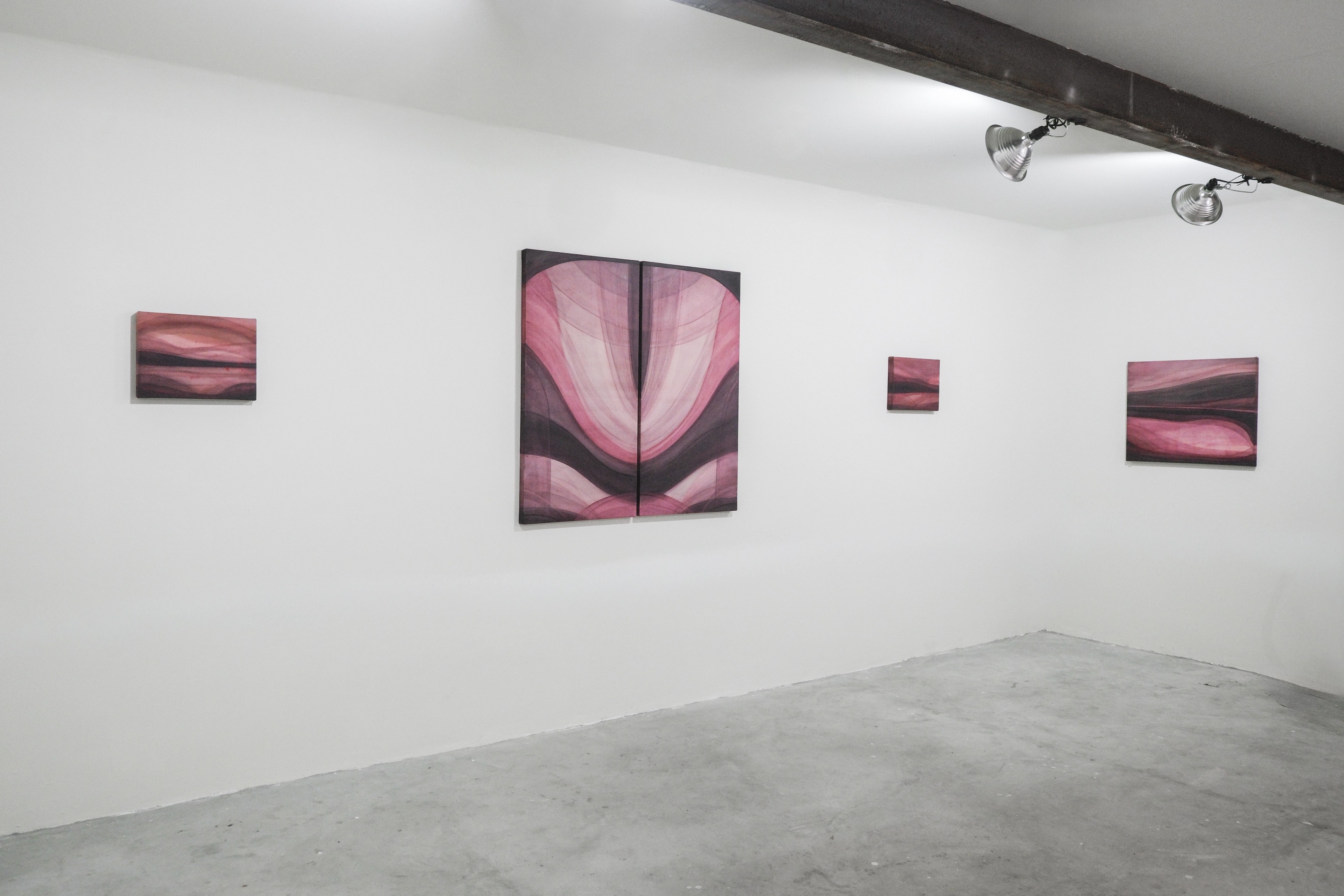
There was a sense of pride in that moment. Not just in the work itself, but in the process that led to it, and in the connections formed over time. The exhibition felt less like a conclusion and more like a point of convergence, where material, place, and people briefly aligned.